

Break-Fix vs. Managed IT Services: Choosing the Right IT Support Model for Your Business
In the rapidly evolving landscape of technology, businesses face critical decisions regarding their IT support models. Understanding the differences between Break-Fix and Managed IT Services is essential for small and medium-sized businesses aiming to optimize their operations. This article will explore the nuances of these two IT support models, helping you determine which is best suited for your business needs. Many organizations struggle with unpredictable IT costs and downtime, which can hinder productivity and growth. By examining the benefits and drawbacks of each model, you can make an informed choice that aligns with your operational goals. We will delve into the key differences, advantages, and considerations for selecting the right IT support provider, particularly in the Dallas-Fort Worth Metroplex.
The differences between Break-Fix and Managed IT Services are as follows:
Break-Fix and Managed IT Services represent two distinct approaches to IT support, each with its own set of characteristics and implications for businesses. The primary difference lies in their operational strategies: Break-Fix is reactive, addressing issues as they arise, while “Managed IT Services” are proactive, focusing on prevention and ongoing support.
- Reactive vs. Proactive Approach: Break-Fix services respond to problems only after they occur, leading to potential downtime and lost productivity. In contrast, Managed IT Services involve continuous monitoring and maintenance, reducing the likelihood of issues before they impact operations.
- Cost Predictability: With Break-Fix, costs can be unpredictable, as businesses pay for services only when problems arise. Managed IT Services typically operate on a subscription model, providing predictable monthly costs that help businesses budget effectively.
This unpredictable nature of break-fix support can lead to significant challenges, as highlighted by research into its inherent problems.
Break-Fix Mentality & Unpredictable IT Costs
Chapter 5, “Quality Debt,” discusses the problem inherent in the break/fix mentality common. This leads to unpredictable feature delivery. The software accrues debt at an accelerated rate because of this approach.
Managing software debt: building for inevitable change, 2010
- Focus on Security and Efficiency: Managed IT Services prioritize security through regular updates and monitoring, while Break-Fix may leave businesses vulnerable to threats due to delayed responses to issues.
Understanding these differences is crucial for businesses looking to enhance their IT support strategy.
What Are Managed IT Services and Their Benefits for Small Businesses?

Managed IT Services refer to a comprehensive approach to IT support where a service provider takes responsibility for managing and maintaining a company’s IT infrastructure. This model offers several benefits, particularly for small businesses that may lack the resources for in-house IT management.
- Cost Reduction: By opting for Managed IT Services, businesses can reduce overall IT costs through predictable monthly fees, eliminating unexpected expenses associated with Break-Fix models.
- Enhanced Security: Managed IT Services provide continuous monitoring and regular updates, significantly improving a business’s cybersecurity posture and protecting sensitive data.
- Increased Productivity: With proactive support, businesses can minimize downtime and ensure that their IT systems are running efficiently, allowing employees to focus on their core tasks without interruption.
These benefits make Managed IT Services an attractive option for small businesses seeking to streamline their operations and enhance their IT capabilities.
The tangible advantages of adopting a service-oriented approach to IT management have been thoroughly documented through various case studies.
Benefits of Service-Oriented IT Management
The situation of IT management before and after implementation was analyzed and through the case studies, this paper shows three typical benefit categories of service-oriented IT management.
Service oriented IT management: benefit, cost and success factors, G Tamm, 2005
How Do Managed IT Services Improve Business Efficiency and Security?
Managed IT Services enhance business efficiency and security through a combination of proactive monitoring, regular maintenance, and strategic planning. By implementing these services, businesses can achieve optimal uptime and reduce the risk of security breaches.
- Predictable IT Costs: Managed IT Services provide a clear understanding of IT expenses, allowing businesses to allocate resources more effectively and avoid unexpected costs.
- Optimal Uptime: Continuous monitoring ensures that potential issues are identified and resolved before they escalate, leading to improved system reliability and performance.
- Proactive Problem-Solving: Managed IT providers employ advanced tools and strategies to address potential vulnerabilities, ensuring that businesses remain secure against evolving threats.
This proactive approach not only enhances security but also contributes to overall business efficiency.
What Advantages Do Managed IT Services Offer Over Traditional Support?
Managed IT Services offer several advantages over traditional Break-Fix support, making them a preferred choice for many businesses.
- Predictable Costs: Unlike Break-Fix, where costs can fluctuate based on the number of issues encountered, Managed IT Services provide a fixed monthly fee, allowing for better financial planning.
- Focus on Core Business: By outsourcing IT management, businesses can concentrate on their core operations without the distraction of IT issues, leading to improved productivity.
- Comprehensive Support: Managed IT Services encompass a wide range of support, including network management, data backup, and cybersecurity, providing a holistic approach to IT needs.
These advantages highlight why many businesses are shifting towards Managed IT Services for their IT support needs.
What Is Break-Fix IT Support and What Are Its Pros and Cons?
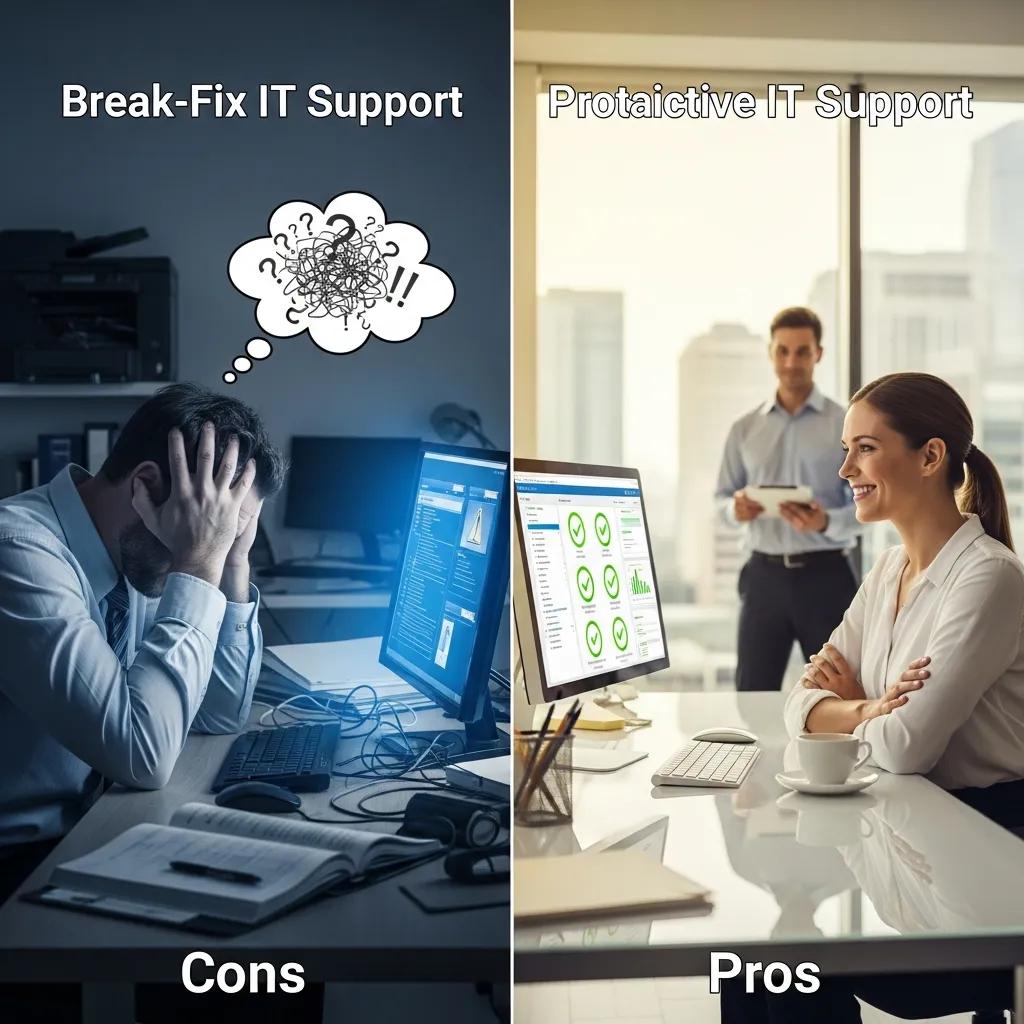
Break-Fix IT Support is a model where businesses pay for IT services only when problems arise. This reactive approach has its own set of advantages and disadvantages.
Pros of Break-Fix IT Support
- Cost-Effectiveness for Minimal Issues: For businesses with infrequent IT problems, Break-Fix can be more cost-effective, as they only pay for services when needed.
- Flexibility: Companies can choose when to engage IT support, allowing for tailored solutions based on immediate needs.
- Simplicity: The model is straightforward, with no long-term contracts or commitments, making it easy for businesses to manage.
Cons of Break-Fix IT Support
- Potential for Higher Costs: Frequent issues can lead to higher overall costs, as businesses may end up paying more for reactive services than they would for a proactive model.
- Unpredictable Expenses: Businesses may face unexpected costs during critical downtimes, impacting their budget and operations.
This inherent uncertainty in traditional IT support models is a key factor that distinguishes them from more modern, managed approaches.
Break-Fix vs. Managed IT: Addressing Cost Uncertainty
Most IT work was called “break/fix”; if something didn’t work, it was fixed. Obviously, there is an element of uncertainty here, and that’s a key differentiator for Managed Service Providers.
IT Managed Service Providers-Nearly an Imperative, 2018
- Longer Downtimes: The reactive nature of Break-Fix can result in longer downtimes, affecting productivity and customer satisfaction.
Understanding these pros and cons is essential for businesses considering their IT support options.
When Is Break-Fix Support a Suitable Option for Businesses?
Break-Fix support may be suitable for businesses in specific scenarios where IT needs are minimal or infrequent.
- Limited IT Budgets: Small businesses with tight budgets may find Break-Fix more manageable, as they can control costs by only engaging IT support when necessary.
- Infrequent Technical Problems: Companies that experience few IT issues may benefit from the flexibility of Break-Fix, avoiding the commitment of a managed service.
- Internal Capability for Minor Issues: Businesses with in-house IT staff capable of handling minor problems may choose Break-Fix to supplement their existing support.
These factors can help businesses determine if Break-Fix is the right fit for their IT support needs.
What Risks and Costs Are Associated with Break-Fix IT Support?
While Break-Fix IT Support can be appealing, it also comes with inherent risks and costs that businesses should consider.
- Higher Costs During Frequent Issues: Businesses may incur significant expenses if they experience frequent IT problems, negating the initial cost savings of the Break-Fix model.
- Unpredictable Expenses: The reactive nature of this model can lead to unexpected costs, making budgeting challenging for businesses.
- Longer Downtimes: Break-Fix support may result in longer downtimes, which can disrupt operations and negatively impact customer satisfaction.
Understanding these risks is crucial for businesses evaluating their IT support options.
How to Choose the Right IT Support Provider in Dallas-Fort Worth
Selecting the right IT support provider is critical for businesses in the Dallas-Fort Worth area. Here are key factors to consider:
- Experience and Reputation: Look for providers with a proven track record and positive reviews from other businesses in your industry.
- Range of Services: Ensure the provider offers a comprehensive suite of services that align with your business needs, including cybersecurity, data backup, and network management.
- Response Time: Evaluate the provider’s response time to ensure they can address issues promptly and minimize downtime.
Choosing the right provider can significantly impact your business’s IT performance and security.
What Factors Should Small Businesses Consider When Selecting IT Support?
When selecting IT support, small businesses should consider several critical factors to ensure they make the best choice.
- Personalized Solutions: Look for providers that offer tailored solutions to meet your specific business needs and challenges.
- Service Offerings: Ensure the provider has a comprehensive range of services, including proactive monitoring, cybersecurity, and data management.
- Cost Management: Evaluate the provider’s pricing structure to ensure it aligns with your budget and offers predictable costs.
These considerations can help small businesses find the right IT support that meets their unique requirements.
How Does Local Expertise Impact IT Support Quality and Responsiveness?
Local expertise plays a significant role in the quality and responsiveness of IT support services.
- Quick Response Times: Local providers can often respond more quickly to issues, minimizing downtime and disruptions.
- Tailored Solutions: Understanding local market conditions and challenges allows providers to offer solutions that are more relevant and effective.
- Understanding Local Challenges: Local providers are more likely to be familiar with the specific challenges businesses face in the Dallas-Fort Worth area, enabling them to provide better support.
This local expertise can enhance the overall effectiveness of IT support services.
What Are the Key Differences Between Managed IT and Break-Fix Support Models?
The key differences between Managed IT and Break-Fix support models can significantly impact a business’s IT strategy.
- Proactive vs. Reactive Approach: Managed IT focuses on prevention and ongoing support, while Break-Fix is reactive, addressing issues as they arise.
- Cost Structure Differences: Managed IT typically involves predictable monthly fees, whereas Break-Fix can lead to unpredictable costs based on service needs.
- Service Availability: Managed IT services are available 24/7, ensuring continuous support, while Break-Fix may not offer the same level of availability.
Understanding these differences is essential for businesses when choosing their IT support model.
How Do Cost Structures Compare Between Managed IT and Break-Fix Services?
Cost structures between Managed IT and Break-Fix services vary significantly, impacting overall IT budgeting.
- Predictable Costs of Managed Services: Managed IT services typically operate on a subscription model, providing predictable monthly costs that help businesses budget effectively.
- Variable Costs of Break-Fix: Break-Fix services can lead to fluctuating costs based on the number of issues encountered, making budgeting more challenging.
- Long-Term Financial Implications: Over time, businesses may find that Managed IT services are more cost-effective due to reduced downtime and proactive support.
This comparison highlights the importance of understanding cost structures when selecting an IT support model.
What Impact Do These Models Have on Downtime and Business Continuity?
The choice between Managed IT and Break-Fix support models can significantly impact downtime and business continuity.
- Proactive Management Reduces Downtime: Managed IT services focus on prevention, leading to fewer disruptions and improved system reliability.
- Impact on Productivity: Reduced downtime translates to higher productivity levels, as employees can work without interruptions caused by IT issues.
- Business Continuity Strategies: Managed IT services often include disaster recovery and business continuity planning, ensuring that businesses can quickly recover from unexpected events.
Understanding these impacts is crucial for businesses aiming to maintain operational efficiency.
How Can IT Support Plans Be Tailored to Meet Small Business Needs?
Tailoring IT support plans to meet small business needs is essential for maximizing effectiveness.
- Understanding Unique Challenges: Providers should assess the specific challenges faced by small businesses to create customized solutions.
- Flexible Service Options: Offering flexible service options allows businesses to choose the level of support that best fits their needs and budget.
- Scalable Solutions: As businesses grow, their IT needs may change. Scalable solutions ensure that support can evolve alongside the business.
These tailored approaches can enhance the overall effectiveness of IT support for small businesses.
What Service Levels and Contract Types Are Common in Managed IT Plans?
Managed IT plans typically offer various service levels and contract types to meet diverse business needs.
- Basic Network Package: This package often includes essential services such as monitoring and basic support.
- Standard Network Package: A more comprehensive option that includes additional services like data backup and cybersecurity measures.
- Complete Server Package: This package provides extensive support, including server management, advanced security, and disaster recovery planning.
Understanding these options can help businesses select the right managed IT plan for their needs.
How Do Customized IT Support Plans Enhance Business Growth and Security?
Customized IT support plans can significantly enhance business growth and security through tailored solutions.
- Tailored Solutions for Specific Needs: Custom plans address the unique challenges faced by businesses, ensuring that IT support aligns with operational goals.
- Proactive Maintenance Benefits: Regular maintenance and monitoring help prevent issues before they arise, contributing to overall system reliability.
- Cybersecurity Enhancements: Customized plans often include advanced security measures tailored to the specific risks faced by the business, enhancing overall protection.
These benefits highlight the importance of customized IT support in fostering business growth and security.
Why Should Dallas-Fort Worth Businesses Consider Managed IT Services?
Dallas-Fort Worth businesses should consider Managed IT Services for several compelling reasons.
- Proactive Monitoring: Managed IT Services provide continuous monitoring, ensuring that potential issues are addressed before they impact operations.
- Predictable IT Costs: The subscription model offers predictable monthly costs, making budgeting easier for businesses.
- Improved Productivity: With proactive support, businesses can minimize downtime and enhance overall productivity, allowing employees to focus on their core tasks.
These factors make Managed IT Services an attractive option for businesses in the Dallas-Fort Worth area.
What Local Market Trends Support the Shift to Managed IT Services?
Several local market trends are driving the shift towards Managed IT Services in the Dallas-Fort Worth area.
- Increased Reliance on Technology: As businesses become more dependent on technology, the need for reliable IT support has grown.
- Cloud Adoption Trends: The rise of cloud computing has led to increased demand for managed services that can effectively manage cloud environments.
- Need for Enhanced Security: With rising cybersecurity threats, businesses are seeking proactive solutions to protect their data and systems.
These trends underscore the importance of Managed IT Services in meeting the evolving needs of businesses.
How Have Recent Case Studies Demonstrated ROI from Managed IT Adoption?
Recent case studies have shown that businesses adopting Managed IT Services experience significant returns on investment (ROI).
- Real-World Examples of Cost Savings: Companies have reported substantial cost savings through reduced downtime and predictable IT expenses.
- Productivity Improvements: Businesses have experienced increased productivity levels as a result of proactive IT support and minimized disruptions.
- Long-Term Benefits: The long-term benefits of Managed IT Services include enhanced security, improved operational efficiency, and better resource allocation.
These case studies highlight the tangible benefits of adopting Managed IT Services for businesses seeking to optimize their IT support.